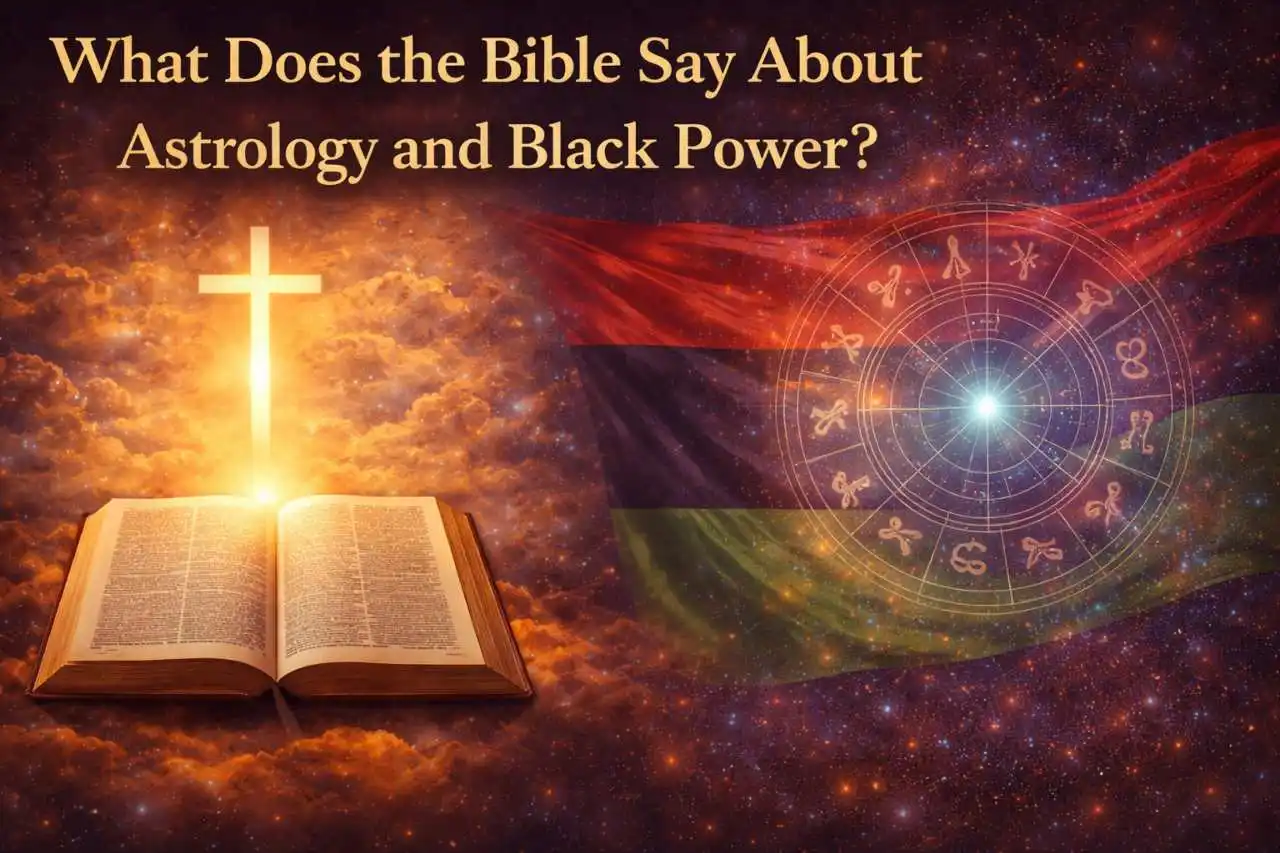
You might be surprised how often these two topics come up together. People are trying to figure out their faith while also dealing with real questions about identity, culture, and fairness. Whether you go to church every Sunday, you’re just starting to ask questions, or you’re simply curious—this is for you. No complicated language. No preaching. Just an honest conversation.
So What Is Astrology, Anyway?
Most of us have checked our horoscope at least once. Maybe you looked up your zodiac sign, heard someone blame Mercury retrograde for a bad week, or scrolled through a birth chart just to see what it said.
Astrology is basically the idea that the position of the sun, moon, and planets at the time you were born has some influence over your personality, your relationships, and your future.
For a lot of people, it feels like harmless fun. But if faith matters to you, it is worth knowing what the Bible actually says — because the answer might surprise you.
The Bible and Astrology
God Is Pretty Direct About It
The Bible does not dance around this topic. God warned His people multiple times to stop looking to the stars for answers.
In Isaiah 47, God speaks directly to the city of Babylon — a place famous for its astrology. His message was blunt: all their star readers and sky watchers could not save the city. They could not even save themselves. That says a lot about what astrology is really worth.
Deuteronomy 18 goes even further. It puts fortune-telling, reading omens, and consulting the stars in the same group as witchcraft. God called these things detestable. That is not mild language.
Jeremiah 10:2 keeps it short: do not follow the habits of surrounding nations and do not be impressed by signs in the sky.
So Why Does God Care?
Here is something important to understand — God is not against the stars. He made them. The real issue is about where you place your trust.
When you turn to a horoscope to figure out who to date, what job to take, or how your week is going to go — you are leaning on something other than God for direction. The Bible says God is the one who holds your future. Astrology quietly replaces Him with something else.
That is the heart of the problem.
What About the Wise Men and the Star?
This is a fair question. The Wise Men followed a star to find baby Jesus. Does that not make astrology seem acceptable?
Not exactly. That star was not a horoscope. It was a specific sign that God placed in the sky for one reason — to lead people to the birth of Jesus. God used a moment in the heavens for His own divine purpose.
That is completely different from a person checking planetary positions to make personal life decisions. One is God directing history. The other is a person putting the stars in God’s place.
What About Genesis 1:14?
Some people point to this verse, where God says that he created the stars of space, time, and seasons to help us tell day and night. Does this mean he incorporated astrology into the world?
Most Bible teachers say no. That verse is about practical things—knowing when to plant crops, observing the weather, marking the calendar. There’s a big difference between this and using the position of the stars to predict someone’s love life or destiny.
The Bible and Black Power
The phrase “Black Power” became widely known during the civil rights movement of the 1960s. It stood for racial pride, community strength, and the right of Black people to shape their own future. It is more of a cultural and political idea than a religious one — but it connects deeply to what the Bible says about human worth and justice.
Every person has real worth.
Right at the beginning of the Bible, Genesis 1:27 says every human being is made in the image of God. Every single one. That does not change based on skin color, background, or where someone was born.
If you take that seriously, it changes how you see everything. No person is worth more than another. No race sits above or below another. This is not a new idea — it has been in Scripture from the very first pages.
God Does Not Look Away From Injustice
Spend some time reading the Old Testament prophets and one thing becomes very clear — God has strong feelings about how people treat each other, especially those who are vulnerable.
In Amos 5:24, He says justice should flow like a river that never runs dry. That is not a soft suggestion. It is a demand.
Proverbs 31:8–9 says to speak up for those who cannot speak for themselves and to defend the rights of the poor. The Bible treats this as a responsibility, not an option.
Paul Wrote Something That Was Truly Radical
In Galatians 3:28, Paul wrote that in Christ there is no Jew or Greek, no slave or free, no male or female. Everyone stands equal.
When Paul wrote those words, they were genuinely shocking. Society at that time was built on class and racial divisions. This verse tore all of that down. Honestly, it still does. It breaks apart every wall people build between each other based on race, background, or status.
What About Black Liberation Theology?
Theologian James H. Cone built an entire school of thought around one central idea — the God of the Bible is specifically the God of oppressed people. He pointed to the Exodus story, where God frees an entire nation from slavery, as the defining theme of Scripture.
From this perspective, striving to liberate and empower Black people isn’t contrary to the Bible. It’s actually consistent with some of its most profound teachings. Not every Christian tradition agrees with every aspect of James H. Cone’s work, but it’s a serious and respectful way of reading Scripture that many believers consider meaningful.
Conclusion
These two topics seem superficially different, but they are deeply connected. The question is where we place our trust and how we treat the people around us.
The Bible shuns astrology because it secretly removes your trust from God. And it stands firmly for justice and respect for every human being, regardless of their race or background.
You don’t need all the answers to truly understand these ideas. Sometimes the best start in life is simply being willing to ask questions.